Breaking Down Personality: Thinking vs. Feeling – Everyday Fulfillment
No Vacation Required
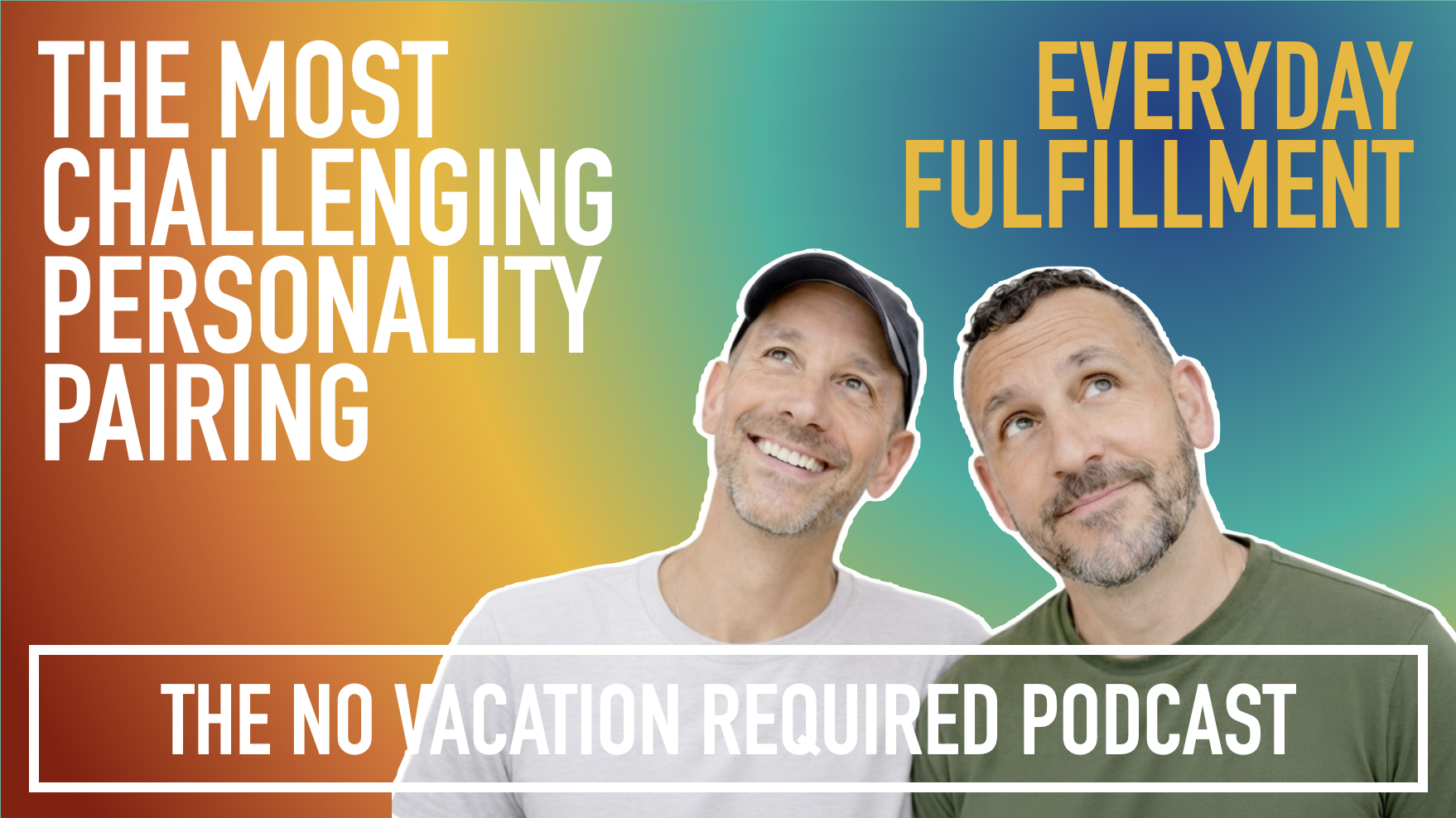
If you’ve ever been in a disagreement where one person is leading with their heart and the other is essentially leading with a spreadsheet, you already know exactly how challenging the Thinking and Feeling dynamic can be.
It’s one of the most glaring differences in how we process the world. When one person is focused on objective logic and the other is weighing the human impact, it’s easy for wires to cross. You might find yourself wondering, "Why are they being so cold?" while the other person is thinking, "Why aren't they looking at the facts?”
This week, we are diving into the core cognitive engines of personality: Thinking vs. Feeling. We are breaking down how to bridge the gap, whether you are navigating a love relationship, a friendship, or a dynamic at work.
Onward and Inward,

COMMON QUESTIONS ANSWERED IN THIS EPISODE
❓What is the main difference between Thinking and Feeling personalities? Thinking types prioritize detached, objective logic and cause-and-effect when making decisions. Feeling types weigh personal values, human impact, and relational harmony more heavily.
❓Why is the Thinking vs. Feeling pairing so challenging in relationships? When one partner leads with logic and the other leads with values, it can be easy to misunderstand each other. A Feeling type might perceive a Thinking partner as cold or distant, while a Thinking type might struggle to understand a Feeling partner's emotional response.
❓How does the Thinking vs. Feeling dynamic show up in the workplace? Many workplaces prioritize "Thinking" traits, such as data, logic, and clear metrics. This can be challenging for "Feeling" types who may struggle to implement decisions that make sense on paper but don't align with their personal values or sense of harmony.
❓Can a person be both a Thinking and a Feeling type? Yes. While everyone has a natural preference, we all contain multitudes. We use both thinking and feeling processes, and understanding your type is about recognizing which one you naturally lead with.
❓How can Thinking and Feeling types better support each other during stressful times? Under stress, a Thinking type may become overly critical or detached, while a Feeling type might become overwhelmed or overly accommodating just to keep the peace. Supporting each other starts with recognizing these different reactions and asking curious, non-judgmental questions about how the other person is processing the situation.
CHAPTERS
(00:00) Mind Share: AI content, bear encounters, and the failing of discernment
(03:30) Understanding Thinking vs. Feeling
(04:09) Objective logic vs. personal values
(05:07) Why this personality difference is the story of our life
(07:25) The fallout of making values-based decisions in a logic-driven world
(11:05) Why the T-F pairing is the most challenging for couples
(14:05) Navigating a culture that prioritizes the "T" (Thinking)
(19:22) Questions a Thinking person can ask a Feeling person (and vice versa)
(24:20) Mailbag: Why do my partner and I handle stress so differently?
SUPPORT NO VACATION REQUIRED
If this episode resonated with you, please leave a review on Spotify, Apple Podcasts, or YouTube! It is the best way to help our message reach more people.
✅ Never miss an episode by hitting the follow button on Spotify, Apple Podcasts, YouTube or wherever you listen to podcasts
✅ Read The No Vacation Required Book
✅ Follow us on Instagram
✅ Talk To Us